

Patrick Wales-Dinan: What I Look For When I'm Building a Distance Program From Scratch
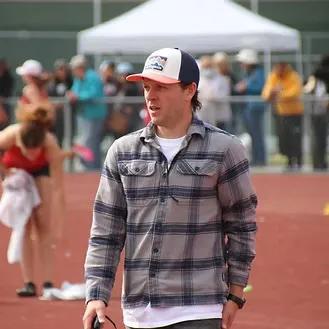
Patrick Wales-Dinan
I've had the opportunity to help build and strengthen distance running programs at several schools throughout my coaching career, including Traip Academy, the University of Southern Maine, Williams College, Long Beach State, and Harvard. Every situation has been different. Some programs already had a solid foundation, while others were just beginning to find their identity.
What I've learned over the years is that building a successful distance program isn't about finding the fastest runners in the region and expecting instant success. It's about creating an environment where athletes enjoy showing up every day, trust one another, and steadily improve together. The wins and personal bests eventually follow, but they start with the culture you build long before race day.
Where Every Program Really Begins
When I stepped into Traip Academy right out of college, there wasn't a distance program in any real sense of the word. There was a team, a practice schedule, and plenty of enthusiasm, but not much structure beyond that.
That first season, I spent more time listening than talking. I watched how athletes trained when nobody was paying attention, learned what motivated different personalities, and tried to understand what each runner needed to improve. Every athlete was different, and that taught me an important lesson early in my coaching career.
You can't build a lasting program around one or two exceptional athletes. Eventually they graduate. What remains is the culture they've helped create. A successful program is one where new athletes naturally step into that culture every season, keeping the same standards and values alive.
That philosophy has stayed with me throughout my coaching career and continues to shape the way I work with athletes today. Whether coaching on the track or connecting with runners through platforms like Life Coach Locator, my focus has always been on long-term athlete development rather than short-term success.
What I Actually Look For in a Runner
People often assume coaches are looking only for fast race times. Speed certainly helps, but it has never been the first thing I notice.
Some of the best athletes I've coached weren't the fastest recruits. What separated them was their willingness to improve every single day.
Here are the qualities I value most:
Resilience. Every runner has difficult workouts and disappointing races. Great athletes learn from those moments instead of being defined by them.
Coachability. The athletes who continue asking questions, accepting feedback, and trusting the process usually make the biggest improvements over four years.
Character. The way someone treats teammates often tells me more than a stopwatch ever will. Strong teams are built by athletes who encourage others, celebrate shared success, and lead through their actions.
Consistency. Improvement usually comes from hundreds of ordinary training days done well rather than one extraordinary workout.
Over the years, I've seen talented runners become exceptional because they committed to the process. Speed can be developed. Habits, discipline, and attitude are what allow that development to happen.
The Progress Nobody Sees
Every program I've worked with has gone through a stage where progress was difficult to measure. You're two or three years into rebuilding, results are inconsistent, and it becomes tempting to look for shortcuts.
I've learned that's usually the point where programs either become stronger or lose their direction.
At Long Beach State, meaningful progress took longer than many people expected. There were weeks when improvements were difficult to see on paper, but behind the scenes the athletes were becoming more disciplined, more confident, and more connected as a team. By the time personal bests started coming consistently, the culture had already been built.
That experience reinforced something I still believe today: lasting improvement usually happens long before it appears on a results sheet.
Distance running rewards patience in a way few sports do. The athletes and coaches who trust consistent work over quick fixes are often the ones who achieve sustainable success.
That same long-term mindset continues to guide how I mentor athletes today, and my coaching background is also reflected in my coaching profile on FieldLevel, where athletes and coaches can learn more about my experience and coaching philosophy.
Recruiting Is Only the Beginning
Recruiting talented athletes is important, but I've come to believe that what happens after recruitment matters even more.
The daily training environment, the relationships within the team, and the confidence athletes build over time often determine how much they improve.
I've coached runners who turned down larger programs because they believed another environment would help them grow more as athletes and people. Looking back, many of those decisions proved to be the right ones.
When athletes feel challenged, supported, and valued every day, they usually discover abilities they didn't know they had.
That's why I invest just as much energy into building a positive team culture as I do into recruiting talented runners.
Why I Continue Coaching
One of the most rewarding parts of coaching is watching athletes accomplish something they once thought was beyond their reach.
Every program I've coached has taught me valuable lessons, and every group of athletes has helped me become a better coach. Whether at Traip Academy, Williams College, Long Beach State, or Harvard, I've been fortunate to work alongside dedicated student-athletes who continually inspire me to keep learning.
Those breakthrough moments—a personal best, a championship performance, or simply seeing an athlete gain confidence—are reminders that meaningful progress is built through consistency, patience, and trust.
If you're building something of your own—a team, a business, a career, or even a personal habit—I would offer the same advice I give my athletes. The period when it feels like nothing is happening is often when the strongest foundation is being built.
I'll continue sharing lessons from my coaching journey here, and I appreciate you taking the time to read. I hope the experiences shared by Patrick Wales-Dinan encourage you to stay patient, trust the process, and keep moving forward. Lasting success is rarely built overnight, but it is always built one consistent step at a time.
About Patrick Wales-Dinan
Patrick Wales-Dinan is an experienced distance running and cross-country coach whose career has included coaching roles at Traip Academy, the University of Southern Maine, Williams College, Long Beach State, and Harvard. His coaching philosophy emphasizes long-term athlete development, team culture, consistency, and helping athletes reach their potential both on and off the course.